Uncategorised

Incident Response

FORENSIC INCIDENT RESPONSE: UNIFIED INCIDENT RESPONSE FOR ADVANCED & AI-DRIVEN THREATS

When network incidents occur, the priority is not monitoring—it’s understanding. RemiFetch is built for post-event investigation, enabling teams to reconstruct exactly what happened across network infrastructure, connected systems, and user activity where intrusions, lateral movement, or AI-assisted attacks may be involved.

RemiFetch aggregates event logs, authentication activity, system behavior, and remote access data from across all platforms into a single, unified timeline. By correlating signals across systems and time, it exposes intrusion paths, lateral movement, persistence mechanisms, and coordinated actions that are often missed in fragmented investigations.

As attackers increasingly leverage AI to accelerate reconnaissance, evade detection, and automate attack execution, traditional tools struggle to keep pace. RemiFetch is designed to detect these patterns—identifying anomalies, linking related activity, and revealing the full scope of adversary behavior.

The result is a clear, evidence-backed reconstruction of the incident—enabling rapid response, accurate root cause analysis, and defensible reporting of even the most complex, AI-driven attacks.
  • Not dependent on known malware signatures or predefined rules
  • Detects patterns, behaviors, and relationships across systems and time
  • Adapts forensic methods dynamically based on the evidence and context
  • Correlates activity across accounts, devices, networks, and platforms automatically
  • Identifies multi-stage and coordinated attacks traditional tools often miss
  • Surfaces hidden relationships and attack paths without manual stitching
  • Produces evidence-backed findings with defensible, audit-ready timelines

Supported Platforms

  • Siemens Energy – grid automation, protection relays, substation control systems
  • Schneider Electric – SCADA platforms, energy management systems, grid control
  • GE Vernova – grid control systems, protection relays, EMS/SCADA platforms
  • ABB – substation automation, protection relays, grid control technologies
  • Hitachi Energy – grid automation, protection systems, substation control
  • SEL (Schweitzer Engineering Laboratories) – protective relays, grid monitoring, automation
  • Emerson – power plant and grid control systems (Ovation DCS)
  • Rockwell Automation – PLCs and industrial control platforms used in grid facilities
  • Honeywell – industrial control systems and plant automation
  • Mitsubishi Electric – protection relays and substation automation systems

Reconstruct Electric Grid Disruption Tradecraft

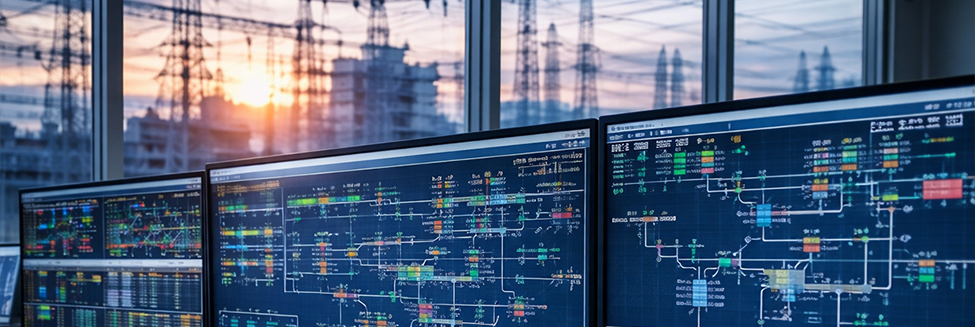
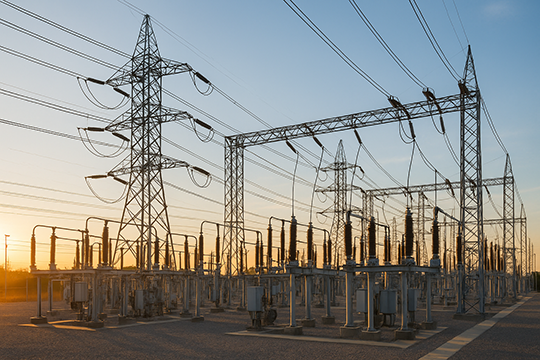
Remi analyzes offline electric grid OT/IT event logs to surface insider behavior, grid disruption tradecraft, and coordinated activity across substations, SCADA systems, protection relays, and dispatch operations. By correlating events across control networks, engineering workstations, and grid telemetry, Remi helps investigators identify unauthorized commands, protection system tampering, abnormal load or frequency events, and multi-site coordination that may indicate adversarial attempts to disrupt electric infrastructure.

Critical Infrastructure: Electric Grid — Detection Catalog

Scrollable list (click a detection to expand)

AI-Assisted Tradecraft Indicators

AI API Usage from ICS Environment AI
Detects calls from ICS hosts to external AI APIs or cloud LLM services that may indicate AI-assisted adversary tradecraft inside operational environments.
Automation Agent Framework Indicators AI
Identifies artifacts suggesting use of automation agents or orchestration frameworks to coordinate actions across electric grid systems.
Local LLM Tooling Present on ICS Asset AI
Flags local AI or LLM tooling installed on engineering workstations or other grid control assets where such tooling is not expected.
Prompt / LLM Artifact Indicators in Logs AI
Detects prompt fragments, model artifacts, or related traces in event logs that may suggest AI-enabled operator assistance or adversary experimentation.

Access & Authentication

Unauthorized SCADA Login Access
Detects logins to SCADA or EMS environments from unauthorized users, workstations, or unusual time windows affecting grid operations visibility and control.
Unauthorized Substation Operator Logins at Odd Hours Identity
Flags operator authentication events that occur outside expected dispatch, maintenance, or engineering schedules.
Compromise of Dispatch Center Operator Account Identity
Identifies indicators that dispatch center credentials may have been hijacked, misused, or leveraged for unauthorized grid actions.
Remote VPN Access Without Authorization Remote
Detects unauthorized VPN or remote access into utility control networks, substations, or engineering environments.

Process & Command Integrity

Breaker Trip Injection Control
Detects unauthorized breaker trip commands that may interrupt transmission, distribution, or substation operations.
Unauthorized Substation Command Injection Control
Flags malicious or unapproved commands targeting substation automation equipment, RTUs, or IED control paths.
SCADA Command Replay Attack Replay
Detects replay of legitimate SCADA control messages intended to repeat previously valid actions against grid assets.
Substation Switchgear Forced Open / Close Switching
Identifies forced or abnormal switchgear open/close activity outside approved operating sequences.
Unauthorized Control of Automatic Load Balancer Balancer
Detects manipulation of automatic load balancing controls that could destabilize distribution or transmission operations.
Unauthorized Remote Disconnect of Substations Remote
Flags remote disconnect actions against substation assets that are not associated with authorized operational procedures.
Malicious Command Flooding to SCADA Bus Flooding
Detects high-volume command bursts intended to overwhelm SCADA communications or obscure operator awareness.

Grid Stability & Operations

Load Shedding Frequency Instability Attacks Operations
Detects manipulation attempts involving load shedding sequences, frequency balancing, or stability controls across the grid.
Generator Manipulation (Frequency / Voltage) Generation
Identifies abnormal commands or telemetry suggesting manipulation of generator frequency or voltage behavior.
Frequency Oscillation Anomalies Anomaly
Flags oscillation patterns or abnormal frequency swings that may indicate disruption or coordinated control activity.
Grid-Wide Oscillation Detection Cross-Substation Anomaly Telemetry
Detects oscillation patterns spanning multiple substations that may indicate wide-area instability or coordinated attacks.
Emergency Load Shedding Disabled Safety
Identifies unauthorized disabling of emergency load shedding mechanisms intended to protect grid stability.

Protection, Device, & Firmware Tampering

Protection Relay Setting Change Protection
Detects unauthorized modifications to protection relay settings that could alter fault response and coordination.
GOOSE or SV Spoof / Replay IEC 61850
Flags spoofed or replayed GOOSE or Sampled Values traffic affecting protection or substation automation workflows.
Malware in Substation RTUs or IEDs Malware
Detects suspicious execution patterns or artifacts indicating malware presence on RTUs, IEDs, or related substation devices.
Unauthorized Firmware Change in IEDs Firmware
Identifies firmware changes to intelligent electronic devices outside authorized engineering or maintenance activities.
Unexpected Firmware Downgrade on RTUs Firmware
Detects suspicious rollback or downgrade activity affecting RTUs that may weaken controls or restore vulnerable states.
Tampering with Protection Relays Tamper
Flags direct tampering, manipulation, or unexpected state changes affecting substation protection relays.

Network, Multi-Site Coordination, & Evidence

DoS on SCADA Network Network
Detects denial-of-service conditions affecting SCADA communications, control availability, or operator visibility.
Communication Loss Between Substations Network
Flags unexpected communication loss between substations, field assets, or utility control environments.
Coordinated Attack Across Multiple Substations Multi-Site
Detects synchronized malicious activity spanning multiple substations or geographically distributed grid assets.
Coordinated Fault Injection Across Substations Multi-Site
Identifies deliberate, coordinated fault injection patterns affecting multiple substations at once.
False Telemetry Data Integrity Attack Integrity
Detects falsified or manipulated telemetry values intended to distort operational awareness or hide coordinated actions.
Unauthorized Access to Grid State Estimation Logs Logs
Flags access to grid state estimation logs or analysis outputs by unauthorized users or systems.
Insider Data Historian Tampering Historian
Detects unauthorized modification or deletion of historian data that could undermine forensic reconstruction and operator confidence.
Suspicious Parallel Operator Sessions at Dispatch Dispatch
Flags overlapping operator sessions or concurrent dispatch activity that may indicate misuse, credential sharing, or adversary presence.

Reconstruct Electric Grid Disruption Tradecraft

Remi analyzes offline electric grid OT/IT event logs to surface insider behavior, grid disruption tradecraft, and coordinated activity across substations, SCADA systems, protection relays, and dispatch operations. By correlating events across control networks, engineering workstations, and grid telemetry, Remi helps investigators identify unauthorized commands, protection system tampering, abnormal load or frequency events, and multi-site coordination that may indicate adversarial attempts to disrupt electric infrastructure.

Investigation Report Package
  • Executive_Summary.txt
  • Operational_Narrative.txt
  • System_State_Timeline.txt
  • Device_Activity_Report.txt
  • Control_Action_Summary.txt
  • Anomaly_Report.txt
  • Artifact_Inventory.txt
  • Artifact_Origin_Report.txt
  • Evidence_Excerpts.txt
  • Thread_Index.txt

Forensic Incident Response: Unified Incident Response for Advanced & AI-Driven Threats

When network incidents occur, the priority is not monitoring—it’s understanding. RemiFetch is built for post-event investigation, enabling teams to reconstruct exactly what happened across network infrastructure, connected systems, and user activity where intrusions, lateral movement, or AI-assisted attacks may be involved.

RemiFetch aggregates event logs, authentication activity, system behavior, and remote access data from across all platforms into a single, unified timeline. By correlating signals across systems and time, it exposes intrusion paths, lateral movement, persistence mechanisms, and coordinated actions that are often missed in fragmented investigations.

As attackers increasingly leverage AI to accelerate reconnaissance, evade detection, and automate attack execution, traditional tools struggle to keep pace. RemiFetch is designed to detect these patterns—identifying anomalies, linking related activity, and revealing the full scope of adversary behavior.

The result is a clear, evidence-backed reconstruction of the incident—enabling rapid response, accurate root cause analysis, and defensible reporting of even the most complex, AI-driven attacks.

  • Aggregation of event logs across systems, platforms, accounts, and remote access tools
  • Unified incident timeline reconstructed across all relevant sources
  • Correlation of user activity, authentication events, and system behavior
  • Rapid identification of intrusion paths, lateral movement, and affected assets
  • Clear attribution of who did what, when, where, and how
  • Evidence-linked reporting with source references and supporting artifacts
  • Chain of custody preserved from collection through final report


AI Takes Forensic Control and Generates Reports in Minutes

RemiFetch operates as a hands-free forensic pipeline—ingesting evidence, applying detection and correlation, and generating structured findings and reports automatically. It maintains forensic control while transforming raw event logs into clear forensic narratives, structured timelines, and traceable evidence sources in minutes.
  • Import Your Native Mixed Event Logs From Any Platform and Vendor

    RemiFetch ingests native mixed event logs from any platform or vendor through a hands-free evidence pipeline—preserving original structure while normalizing diverse sources for analysis. It brings fragmented data together without requiring manual conversion, turning raw logs from multiple environments into a unified forensic foundation ready for detection, correlation, and reporting.

  • AI Uses Behaviors and Pattern Recognition Across All Devices and User Accounts

    RemiFetch uses AI-driven behavior and pattern recognition across all devices and user accounts—analyzing event log activity to identify anomalies, suspicious actions, and non-human execution patterns that traditional methods often miss. By detecting how activity behaves rather than relying on known signatures, it surfaces hidden threats across mixed environments and prepares investigators for deeper forensic analysis.

  • Generates Reporting That Identifies What Happened, How it Happened and Who Was Involved

    RemiFetch generates reporting that identifies what happened, how it happened, and who was involved—automatically producing GPT-style forensic narratives, structured timelines, and evidence-linked source reporting from the underlying event logs. The result is a clear, defensible account of the incident that transforms technical activity into investigation-ready findings, supporting fast understanding, accurate attribution, and professional reporting.


Tell Me More About The Reporting & Deliverables

Our Incident Response reporting engine automatically generates executive summaries, attack classification, attribution analysis, VPN assessment, process execution mapping, artifact origin tracking, and cross-source correlation reports.

It dynamically adapts to available evidence sources—including email, endpoints, firewall, cloud, mobile, SIEM, antivirus, and registry—producing both source-specific insights and multi-source attack reconstruction when applicable.

Incident Response Reports

Our reporting engine generates core reports for every case, then adds source-specific and cross-source reports when supporting evidence is present.

Core Reports

  • Executive Summary
  • Incident Narrative
  • Evidence Sources Summary
  • Network Attribution Report
  • VPN Assessment
  • Attack Classification
  • Process Tree Report
  • Suspicious Executable Report
  • AI Artifact Report
  • Artifact Origin Report

Source-Specific Reports

  • Email: Email Analysis Report
  • Email: Phishing Indicators Report
  • Endpoints: Endpoint Activity Report
  • Endpoints: Execution Artifacts Report
  • Firewall: Firewall Traffic Report
  • Firewall: Connection Analysis Report
  • Cloud: Cloud Activity Report
  • Cloud: Identity Access Report
  • Mobile: Mobile Device Report
  • SIEM: SIEM Correlation Report
  • Antivirus: Antivirus Detection Report
  • Registry: Registry Changes Report

Cross-Source Correlation Reports

  • Cross-Source Correlation Report
  • Lateral Movement Analysis
  • Multi-Vector Attack Analysis
Who did this? Attribution + Network analysis
How did they get in? Attack classification + phishing / credential analysis
Was VPN used? VPN assessment
What executed? Process tree + executables
What moved laterally? Cross-source + lateral movement reports
What data / artifacts are involved? Artifact + AI artifact reports
What systems were impacted? Source-specific reports

More than just answers — our GPT builds a structured narrative, connecting fragmented evidence into clear, contextual insight that fills investigative gaps.

Read more …Incident Response

  • Hits: 586

ICS Electric

Critical Infrastructure:
Electric Grid

AI doesn’t just analyze evidence—it decides how to analyze it. RemiFetch adapts forensic methodology in real time based on detected patterns, automatically applying the right techniques—correlation, artifact extraction, behavioral analysis, and timeline reconstruction—to match the investigation.

By linking signals across systems and evolving its approach as new evidence emerges, AI reveals relationships and attack paths that static workflows cannot. This enables deeper insight, faster investigations, and defensible, evidence-driven conclusions.

  • Not dependent on known malware signatures or predefined rules
  • Detects patterns, behaviors, and relationships across systems and time
  • Adapts forensic methods dynamically based on the evidence and context
  • Correlates activity across accounts, devices, networks, and platforms automatically
  • Identifies multi-stage and coordinated attacks traditional tools often miss
  • Surfaces hidden relationships and attack paths without manual stitching
  • Produces evidence-backed findings with defensible, audit-ready timelines

Supported Platforms

  • Siemens Energy – grid automation, protection relays, substation control systems
  • Schneider Electric – SCADA platforms, energy management systems, grid control
  • GE Vernova – grid control systems, protection relays, EMS/SCADA platforms
  • ABB – substation automation, protection relays, grid control technologies
  • Hitachi Energy – grid automation, protection systems, substation control
  • SEL (Schweitzer Engineering Laboratories) – protective relays, grid monitoring, automation
  • Emerson – power plant and grid control systems (Ovation DCS)
  • Rockwell Automation – PLCs and industrial control platforms used in grid facilities
  • Honeywell – industrial control systems and plant automation
  • Mitsubishi Electric – protection relays and substation automation systems

Reconstruct Electric Grid Disruption Tradecraft

Remi analyzes offline electric grid OT/IT event logs to surface insider behavior, grid disruption tradecraft, and coordinated activity across substations, SCADA systems, protection relays, and dispatch operations. By correlating events across control networks, engineering workstations, and grid telemetry, Remi helps investigators identify unauthorized commands, protection system tampering, abnormal load or frequency events, and multi-site coordination that may indicate adversarial attempts to disrupt electric infrastructure.

Critical Infrastructure: Electric Grid — Detection Catalog

Scrollable list (click a detection to expand)

AI-Assisted Tradecraft Indicators

AI API Usage from ICS Environment AI
Detects calls from ICS hosts to external AI APIs or cloud LLM services that may indicate AI-assisted adversary tradecraft inside operational environments.
Automation Agent Framework Indicators AI
Identifies artifacts suggesting use of automation agents or orchestration frameworks to coordinate actions across electric grid systems.
Local LLM Tooling Present on ICS Asset AI
Flags local AI or LLM tooling installed on engineering workstations or other grid control assets where such tooling is not expected.
Prompt / LLM Artifact Indicators in Logs AI
Detects prompt fragments, model artifacts, or related traces in event logs that may suggest AI-enabled operator assistance or adversary experimentation.

Access & Authentication

Unauthorized SCADA Login Access
Detects logins to SCADA or EMS environments from unauthorized users, workstations, or unusual time windows affecting grid operations visibility and control.
Unauthorized Substation Operator Logins at Odd Hours Identity
Flags operator authentication events that occur outside expected dispatch, maintenance, or engineering schedules.
Compromise of Dispatch Center Operator Account Identity
Identifies indicators that dispatch center credentials may have been hijacked, misused, or leveraged for unauthorized grid actions.
Remote VPN Access Without Authorization Remote
Detects unauthorized VPN or remote access into utility control networks, substations, or engineering environments.

Process & Command Integrity

Breaker Trip Injection Control
Detects unauthorized breaker trip commands that may interrupt transmission, distribution, or substation operations.
Unauthorized Substation Command Injection Control
Flags malicious or unapproved commands targeting substation automation equipment, RTUs, or IED control paths.
SCADA Command Replay Attack Replay
Detects replay of legitimate SCADA control messages intended to repeat previously valid actions against grid assets.
Substation Switchgear Forced Open / Close Switching
Identifies forced or abnormal switchgear open/close activity outside approved operating sequences.
Unauthorized Control of Automatic Load Balancer Balancer
Detects manipulation of automatic load balancing controls that could destabilize distribution or transmission operations.
Unauthorized Remote Disconnect of Substations Remote
Flags remote disconnect actions against substation assets that are not associated with authorized operational procedures.
Malicious Command Flooding to SCADA Bus Flooding
Detects high-volume command bursts intended to overwhelm SCADA communications or obscure operator awareness.

Grid Stability & Operations

Load Shedding Frequency Instability Attacks Operations
Detects manipulation attempts involving load shedding sequences, frequency balancing, or stability controls across the grid.
Generator Manipulation (Frequency / Voltage) Generation
Identifies abnormal commands or telemetry suggesting manipulation of generator frequency or voltage behavior.
Frequency Oscillation Anomalies Anomaly
Flags oscillation patterns or abnormal frequency swings that may indicate disruption or coordinated control activity.
Grid-Wide Oscillation Detection Cross-Substation Anomaly Telemetry
Detects oscillation patterns spanning multiple substations that may indicate wide-area instability or coordinated attacks.
Emergency Load Shedding Disabled Safety
Identifies unauthorized disabling of emergency load shedding mechanisms intended to protect grid stability.

Protection, Device, & Firmware Tampering

Protection Relay Setting Change Protection
Detects unauthorized modifications to protection relay settings that could alter fault response and coordination.
GOOSE or SV Spoof / Replay IEC 61850
Flags spoofed or replayed GOOSE or Sampled Values traffic affecting protection or substation automation workflows.
Malware in Substation RTUs or IEDs Malware
Detects suspicious execution patterns or artifacts indicating malware presence on RTUs, IEDs, or related substation devices.
Unauthorized Firmware Change in IEDs Firmware
Identifies firmware changes to intelligent electronic devices outside authorized engineering or maintenance activities.
Unexpected Firmware Downgrade on RTUs Firmware
Detects suspicious rollback or downgrade activity affecting RTUs that may weaken controls or restore vulnerable states.
Tampering with Protection Relays Tamper
Flags direct tampering, manipulation, or unexpected state changes affecting substation protection relays.

Network, Multi-Site Coordination, & Evidence

DoS on SCADA Network Network
Detects denial-of-service conditions affecting SCADA communications, control availability, or operator visibility.
Communication Loss Between Substations Network
Flags unexpected communication loss between substations, field assets, or utility control environments.
Coordinated Attack Across Multiple Substations Multi-Site
Detects synchronized malicious activity spanning multiple substations or geographically distributed grid assets.
Coordinated Fault Injection Across Substations Multi-Site
Identifies deliberate, coordinated fault injection patterns affecting multiple substations at once.
False Telemetry Data Integrity Attack Integrity
Detects falsified or manipulated telemetry values intended to distort operational awareness or hide coordinated actions.
Unauthorized Access to Grid State Estimation Logs Logs
Flags access to grid state estimation logs or analysis outputs by unauthorized users or systems.
Insider Data Historian Tampering Historian
Detects unauthorized modification or deletion of historian data that could undermine forensic reconstruction and operator confidence.
Suspicious Parallel Operator Sessions at Dispatch Dispatch
Flags overlapping operator sessions or concurrent dispatch activity that may indicate misuse, credential sharing, or adversary presence.

Reconstruct Electric Grid Disruption Tradecraft

Remi analyzes offline electric grid OT/IT event logs to surface insider behavior, grid disruption tradecraft, and coordinated activity across substations, SCADA systems, protection relays, and dispatch operations. By correlating events across control networks, engineering workstations, and grid telemetry, Remi helps investigators identify unauthorized commands, protection system tampering, abnormal load or frequency events, and multi-site coordination that may indicate adversarial attempts to disrupt electric infrastructure.

ICS Electric Focused Reports

REMI turns electric OT/SCADA evidence into source-backed reports for relay settings, breaker activity, telemetry, feeder impact, access artifacts, and examiner-ready case packaging.

Executive_Summary.txt
What it does: Provides the case-level briefing: strongest evidence patterns, affected electric assets, risk posture, confidence limits, and what requires examiner confirmation.
Operational_Narrative.txt
What it does: Reconstructs the operational story in plain language, connecting suspicious access, control actions, device behavior, telemetry gaps, and report-ready findings.
Electric_Event_Timeline.txt
What it does: Builds a chronological event sequence with date/time first, showing remote access, setting changes, breaker actions, telemetry changes, before/after state, and source-backed evidence snippets.
Device_Activity_Report.txt
What it does: Summarizes activity by relay, breaker, RTU, HMI, substation, feeder, workstation, or other electric asset so examiners can see which devices changed and how.
Control_Action_Summary.txt
What it does: Rolls up commands, overrides, state transitions, setting changes, and operator or remote-origin control actions for review of intent, timing, and source consistency.
Protection_Relay_Settings_Report.txt
What it does: Focuses on protection relay settings, setting groups, configuration changes, thresholds, setpoints, and cases where the field state may differ from what the operator console displayed.
Breaker_Switching_Report.txt
What it does: Reviews breaker open, close, trip, failed retry, success, and remote switching sequences to identify source-backed command paths and incident candidates.
Telemetry_Alarm_Report.txt
What it does: Captures telemetry loss, alarm suppression, alarm floods, stale HMI values, console mismatch, and monitoring gaps that may explain why operators did not see the true condition.
Substation_Feeder_Impact_Assessment.txt
What it does: Provides a confirmation-bound assessment of substation, feeder, relay, breaker, and service-continuity impact based on the available evidence.
Remote_Access_Artifact_Report.txt
What it does: Links remote access, malware, AI agents, spawned bots, scripts, payloads, hashes, command paths, and sandbox-preservation targets to electric events when supported by evidence.
Artifact_Inventory.txt
What it does: Lists collected logs, generated outputs, suspicious binaries, scripts, payloads, memory targets, hashes, and preservation-ready evidence artifacts.
Artifact_Origin_Report.txt
What it does: Maps where artifacts came from: vendor source file, device, workstation, account, source IP, import batch, detection rule, correlation path, or analysis finding.
Evidence_Excerpts.txt
What it does: Preserves source-backed snippets and row references that support the report narrative, including AI, bot, malware, relay, breaker, telemetry, and command evidence when present.
Thread_Index.txt
What it does: Indexes investigative threads across detection flags, correlation paths, analysis findings, evidence snippets, report sections, and remaining examiner questions.

Read more … ICS Electric

  • Hits: 362

ICS Water

Critical Infrastructure:
Water Treatment

AI doesn’t just analyze evidence—it decides how to analyze it. RemiFetch adapts forensic methodology in real time based on detected patterns, automatically applying the right techniques—correlation, artifact extraction, behavioral analysis, and timeline reconstruction—to match the investigation.

By linking signals across systems and evolving its approach as new evidence emerges, AI reveals relationships and attack paths that static workflows cannot. This enables deeper insight, faster investigations, and defensible, evidence-driven conclusions.

Analyzes offline water treatment OT/SCADA event logs locally—beyond simple signature or rule-only checks
Correlates activity across operator consoles (HMI), engineering workstations, and control network segments over time
Flags suspicious operational changes—pump/valve actions, chemical dosing setpoints, and configuration changes that impact process stability
Highlights alarm manipulation patterns (flooding or silence) and safety-relevant state transitions that require review
Identifies insider-risk signals—privileged misuse, off-hours access, unusual command origin, and policy deviations
Surfaces concealment indicators—log gaps, time anomalies, and unusual tooling—without manual stitching across sources
Produces evidence-backed findings with defensible timelines for incident response, regulatory review, and case export

Supported ICS Platforms

Remi analyzes event log data from a wide range of industrial control system platforms and operational technologies commonly deployed across critical infrastructure environments. The system supports logs and data generated by leading ICS, SCADA, PLC, and automation vendors used in plant operations, grid control, and utility infrastructure. By normalizing and correlating activity across these systems, Remi enables investigators to reconstruct operational events, identify suspicious engineering changes, and detect adversarial behaviors across complex OT environments regardless of the vendor platform involved.

  • Siemens – PLCs, SCADA systems, and water utility automation platforms
  • Schneider Electric – SCADA systems, PLCs, and water infrastructure automation
  • Rockwell Automation (Allen-Bradley) – PLCs and industrial control systems used in treatment plants
  • Emerson – plant automation and distributed control systems
  • ABB – process automation and water infrastructure control systems
  • Xylem / YSI – water monitoring systems and treatment process controls
  • Honeywell – industrial control systems and plant monitoring platforms
  • Mitsubishi Electric – PLCs and automation systems used in water facilities
  • Yokogawa – distributed control systems and process automation platforms
  • Endress+Hauser – instrumentation and process control systems for water treatment

Remi analyzes offline water treatment OT/SCADA event logs to surface insider behavior, disruption tradecraft, and coordinated activity.

Water treatment is critical infrastructure—when it’s disrupted, the impact is immediate: public health, continuity of operations, and community stability. Remi analyzes offline water treatment OT/SCADA event logs to surface insider threat signals, coordinated disruption behaviors, and concealment patterns, then organizes them into a defensible timeline and evidence-backed findings for rapid response and escalation. All processing is local-first and offline, supporting sensitive investigations without sending operational data to the cloud.

Critical Infrastructure: Water Treatment — Detection Catalog

Scrollable list (click a detection to expand)

Access & Authentication

Unauthorized HMI/EWS Login Access
Unapproved access to SCADA workstations/servers.
Privileged Account Change Identity
Unexpected role/group changes in OT identities.
Unapproved Remote Access Session Remote
Remote sessions outside policy/time window.

Process & Command Integrity

Unauthorized Pump Start/Stop Control
Control actions initiated by non-approved principals/hosts.
Valve Actuation Outside Operating Window Change
Valve changes during non-maintenance periods.
Chemical Dosing Setpoint Change Setpoint
Dosing adjustments that require review/authorization.
Rapid Command Oscillation (“Chatter”) Anomaly
Repeated toggling of pumps/valves/setpoints.

Safety & Operations Monitoring

Tank Level / Flow Anomaly Spike Telemetry
Sudden shifts inconsistent with baseline behavior.
Pressure/Backwash Cycle Anomaly Operations
Abnormal sequences that may indicate manipulation.
Alarm Flooding / Alarm Silence Pattern Alarms
Unusual bursts or suspicious quiet periods.

Asset & Configuration Changes

PLC/RTU Configuration Change Config
Controller/RTU config modifications requiring validation.
Firmware/Logic Change Detected Baseline
Changes to logic/firmware vs known baseline.
New OT Asset Discovered Inventory
New device appearing on OT segments.

Network & Segmentation

OT Zone Boundary Violation Network
Unexpected traffic crossing OT segmentation boundaries.
New East–West Communication Path Network
New peer-to-peer connections between OT nodes.
Historian/Data Gateway Anomaly Telemetry
Unexpected behavior in telemetry aggregation paths.

Data Integrity & Readiness

Time Sync Drift / Jump Time
Clock anomalies affecting event sequencing.
Telemetry Gap / Dropout Integrity
Missing data windows from critical sources.
Case Evidence Completeness Readiness
Confirms required outputs exist for export packaging.

Near-Instant AI Generated Reporting

Remi analyzes offline water treatment OT/SCADA event logs to expose disruption tradecraft and insider-risk behavior—linking suspicious access, pump/valve actions, chemical dosing setpoint changes, alarm manipulation, and concealment signals into a single, defensible timeline. The report set turns fragmented operational data into evidence-backed findings and correlated investigative threads for rapid response, escalation, and regulatory review—local-first and offline.

ICS Water Focused Reports

REMI analyzes offline water treatment OT/SCADA evidence to connect suspicious access, pump and valve actions, chemical dosing changes, water-quality anomalies, telemetry gaps, and service-continuity risk.

Executive_Summary.txt
What it does: Provides the case-level briefing: key water-system findings, affected assets, public-health or service-continuity concerns, confidence limits, and required examiner confirmation.
Operational_Narrative.txt
What it does: Reconstructs the operational story across treatment, distribution, SCADA/HMI activity, operator actions, suspicious access, and process changes.
Water_Process_Timeline.txt
What it does: Builds a chronological water-process sequence with date/time first, showing pump, valve, tank, reservoir, pressure, flow, dosing, alarms, before/after states, and evidence snippets.
Asset_Activity_Report.txt
What it does: Summarizes activity by pump, valve, PLC, RTU, HMI, tank, reservoir, chemical feed system, sensor, or facility so examiners can see which assets changed.
Control_Action_Summary.txt
What it does: Rolls up pump starts/stops, valve open/close actions, dosing changes, setpoint edits, overrides, and commands by source, timing, and operational effect.
Water_Quality_Anomaly_Report.txt
What it does: Focuses on chlorine, turbidity, pH, conductivity, contamination-adjacent indicators, abnormal sensor values, and water-quality thresholds that require review.
Pressure_Flow_Level_Report.txt
What it does: Reviews pressure drops/spikes, abnormal flow, tank or reservoir level changes, pump/valve relationships, and distribution-system stability indicators.
Chemical_Dosing_Report.txt
What it does: Tracks chemical feed status, dosing setpoints, over-dosing, under-dosing, disabled feed systems, manual overrides, and source-backed dosing changes.
Telemetry_Alarm_Report.txt
What it does: Captures telemetry loss, alarm suppression, alarm floods, stale HMI values, console mismatch, sensor gaps, and why operators may not have seen the true process state.
Public_Health_Service_Continuity_Assessment.txt
What it does: Provides a confirmation-bound assessment of whether the evidence pattern could affect potable water quality, distribution pressure, treatment continuity, or service availability.
Artifact_Inventory.txt
What it does: Lists collected logs, generated outputs, suspicious binaries, scripts, payloads, memory targets, hashes, and preservation-ready evidence artifacts.
Artifact_Origin_Report.txt
What it does: Maps where artifacts came from: vendor source file, plant system, workstation, account, source IP, import batch, detection rule, correlation path, or analysis finding.
Evidence_Excerpts.txt
What it does: Preserves source-backed snippets and row references that support the report narrative, including dosing, pump, valve, pressure, water-quality, telemetry, and malware/artifact evidence when present.
Thread_Index.txt
What it does: Indexes investigative threads across detection flags, correlation paths, analysis findings, evidence snippets, report sections, and remaining examiner questions.

Read more … ICS Water

  • Hits: 354

ICS Nuclear

Critical Infrastructure: Nuclear Power

AI doesn’t just analyze evidence—it decides how to analyze it. RemiFetch adapts forensic methodology in real time based on detected patterns, automatically applying the right techniques—correlation, artifact extraction, behavioral analysis, and timeline reconstruction—to match the investigation.

By linking signals across systems and evolving its approach as new evidence emerges, AI reveals relationships and attack paths that static workflows cannot. This enables deeper insight, faster investigations, and defensible, evidence-driven conclusions.

Supported Industrial Control Systems 

  • Siemens
  • Rockwell Automation
  • Emerson
  • GE Vernova
  • Schneider Electric
  • Not limited to known malware signatures, static detections, or predefined attack rules
  • Detects adversary behaviors, tradecraft patterns, and operational relationships across systems, accounts, and time
  • Helps reconstruct coordinated intrusion activity associated with foreign adversaries and hostile cyber operations
  • Identifies indicators that AI may have been leveraged for automated reconnaissance, access attempts, escalation, or disruption activity
  • Correlates activity across devices, networks, platforms, vendors, and user accounts into a unified investigative view
  • Exposes hidden attack paths, multi-stage operations, and coordinated actions that traditional tools often fail to connect
  • Produces evidence-backed findings with defensible, audit-ready timelines for intelligence, investigative, and reporting use

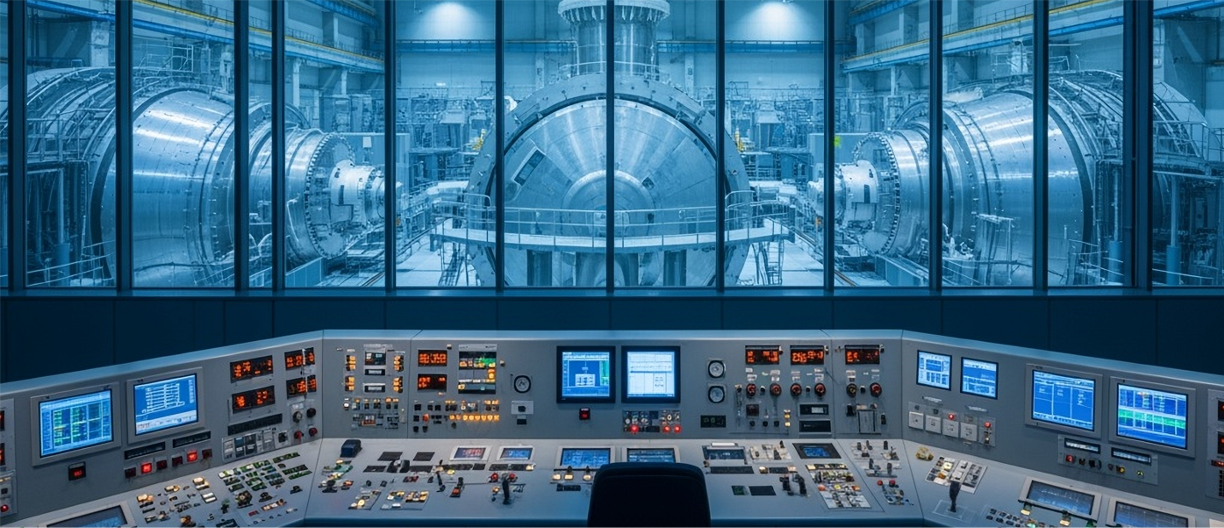
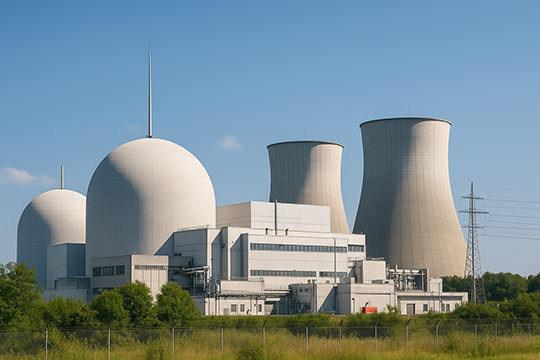
Remi analyzes offline nuclear OT/IT event logs to surface insider behavior, disruption tradecraft, and coordinated activity

Remi identifies adversary tradecraft in nuclear environments by linking low-signal events into behaviors: access → staging → execution → concealment. It flags suspicious access patterns (privileged use, unusual endpoints, off-hours), operational disruption indicators (unexpected command/mode changes, safety-relevant state transitions, alarm floods/silence), and persistence/covering tracks (log gaps, time shifts, unexpected configuration changes). By correlating events across OT and supporting IT systems, Remi surfaces coordinated activity that looks benign in isolation but high-risk in sequence—then packages evidence and summaries for investigation and compliance.

Water & Wastewater (ICS) — Detection Catalog

Scrollable list (click a rule to expand)

Access & Authentication

Unauthorized HMI/EWS Login Access
Unapproved access to SCADA workstations/servers.
Privileged Account Change Identity
Unexpected role/group changes in OT identities.
Unapproved Remote Access Session Remote
Remote sessions outside policy/time window.

Process & Command Integrity

Unauthorized Pump Start/Stop Control
Control actions initiated by non-approved principals/hosts.
Valve Actuation Outside Operating Window Change
Valve changes during non-maintenance periods.
Chemical Dosing Setpoint Change Setpoint
Dosing adjustments that require review/authorization.
Rapid Command Oscillation (“Chatter”) Anomaly
Repeated toggling of pumps/valves/setpoints.

Safety & Operations Monitoring

Tank Level / Flow Anomaly Spike Telemetry
Sudden shifts inconsistent with baseline behavior.
Pressure/Backwash Cycle Anomaly Operations
Abnormal sequences that may indicate manipulation.
Alarm Flooding / Alarm Silence Pattern Alarms
Unusual bursts or suspicious quiet periods.

Asset & Configuration Changes

PLC/RTU Configuration Change Config
Controller/RTU config modifications requiring validation.
Firmware/Logic Change Detected Baseline
Changes to logic/firmware vs known baseline.
New OT Asset Discovered Inventory
New device appearing on OT segments.

Network & Segmentation

OT Zone Boundary Violation Network
Unexpected traffic crossing OT segmentation boundaries.
New East–West Communication Path Network
New peer-to-peer connections between OT nodes.
Historian/Data Gateway Anomaly Telemetry
Unexpected behavior in telemetry aggregation paths.

Data Integrity & Readiness

Time Sync Drift / Jump Time
Clock anomalies affecting event sequencing.
Telemetry Gap / Dropout Integrity
Missing data windows from critical sources.
Case Evidence Completeness Readiness
Confirms required outputs exist for export packaging.

Nuclear Disruption Investigation Reports

Reads offline OT/IT event logs from the case workspace to reconstruct tradecraft as behavior, not isolated alerts
Maps disruption sequences across phases: access → positioning → execution → concealment
Flags credential misuse and privilege abuse indicators consistent with insider or adversary activity
Highlights unusual operator / engineering workstation activity and policy-deviating access patterns
Detects suspicious command origin patterns and abnormal mode / setpoint / control-action sequences
Elevates safety-relevant state changes that require heightened scrutiny and review
Surfaces concealment indicators: atypical log gaps, time/clock anomalies, and evidence-tampering signals
Identifies alarm manipulation patterns (flooding or silence) and configuration / logic drift that may indicate unauthorized change pathways

Remi generates this nuclear-focused report set by reading your offline OT/IT event logs from the case workspace and reconstructing adversary (or insider) tradecraft as behavior, not isolated alerts. It looks for sequences consistent with disruption operations—access → positioning → execution → concealment—including credential/privilege misuse, unusual operator/engineering workstation activity, suspicious command origin patterns, abnormal mode/setpoint/control sequences, and safety-relevant state changes that require scrutiny. It also highlights concealment indicators such as atypical log gaps, time/clock anomalies, alarm flooding or silence patterns, and configuration/logic drift that may indicate tampering or unauthorized change pathways.

Report Types

ICS Nuclear Focused Reports

REMI packages nuclear OT/SCADA evidence into confirmation-bound reports for safety-system state, procedure access, control actions, alarms, radiation or process monitoring, artifacts, and preservation-ready investigative threads.

Executive_Summary.txt
What it does: Provides the case-level briefing: strongest evidence patterns, affected nuclear systems, safety-boundary considerations, confidence limits, and what requires examiner confirmation.
Operational_Narrative.txt
What it does: Reconstructs the operational story across protected access, procedure activity, control actions, system-state changes, alarms, monitoring signals, and suspicious access.
Nuclear_Event_Timeline.txt
What it does: Builds a chronological sequence with date/time first, showing access, procedure events, control-system changes, safety-system state, alarms, monitoring changes, and source-backed snippets.
Safety_System_State_Report.txt
What it does: Focuses on safety-system status, protection logic, interlocks, trip-related states, cooling or control-loop indicators, and before/after changes that require expert review.
Control_Rod_Cooling_System_Report.txt
What it does: Reviews control rod, cooling, valve, pump, loop, and auxiliary system activity when those signals are present in the imported source logs.
Radiation_Process_Monitoring_Report.txt
What it does: Captures radiation monitor, process monitor, sensor, threshold, and abnormal reading evidence while keeping conclusions confirmation-bound for specialist review.
Procedure_Access_Activity_Report.txt
What it does: Summarizes procedure access, protected engineering access, account activity, operator actions, vendor sessions, authorization context, and source-backed identity signals.
Control_Action_Summary.txt
What it does: Rolls up commands, overrides, setpoint/configuration changes, procedure-linked actions, and control-system changes by origin, timing, and operational context.
Telemetry_Alarm_Report.txt
What it does: Captures telemetry loss, alarm suppression, alarm floods, stale displays, console mismatch, annunciator gaps, and monitoring conditions that may hide the true system state.
Safety_Boundary_Impact_Assessment.txt
What it does: Provides a cautious, confirmation-bound assessment of whether the evidence pattern could relate to safety boundaries, protected systems, monitoring integrity, or operational continuity.
Remote_Access_Artifact_Report.txt
What it does: Links remote access, vendor sessions, malware, AI agents, spawned bots, scripts, payloads, hashes, command paths, and sandbox-preservation targets to nuclear events when supported by evidence.
Artifact_Inventory.txt
What it does: Lists collected logs, generated outputs, suspicious binaries, scripts, payloads, memory targets, hashes, and preservation-ready evidence artifacts.
Artifact_Origin_Report.txt
What it does: Maps where artifacts came from: vendor source file, protected system, workstation, account, source IP, import batch, detection rule, correlation path, or analysis finding.
Evidence_Excerpts.txt
What it does: Preserves source-backed snippets and row references that support the report narrative, including procedure access, safety-state, control action, telemetry, radiation/process monitoring, and artifact evidence when present.
Thread_Index.txt
What it does: Indexes investigative threads across detection flags, correlation paths, analysis findings, evidence snippets, report sections, and remaining examiner questions.

Read more … ICS Nuclear

  • Hits: 441

Financial Accounting

Financial Crimes:
AI Detects Frauds, Thefts and Crimes in Minutes

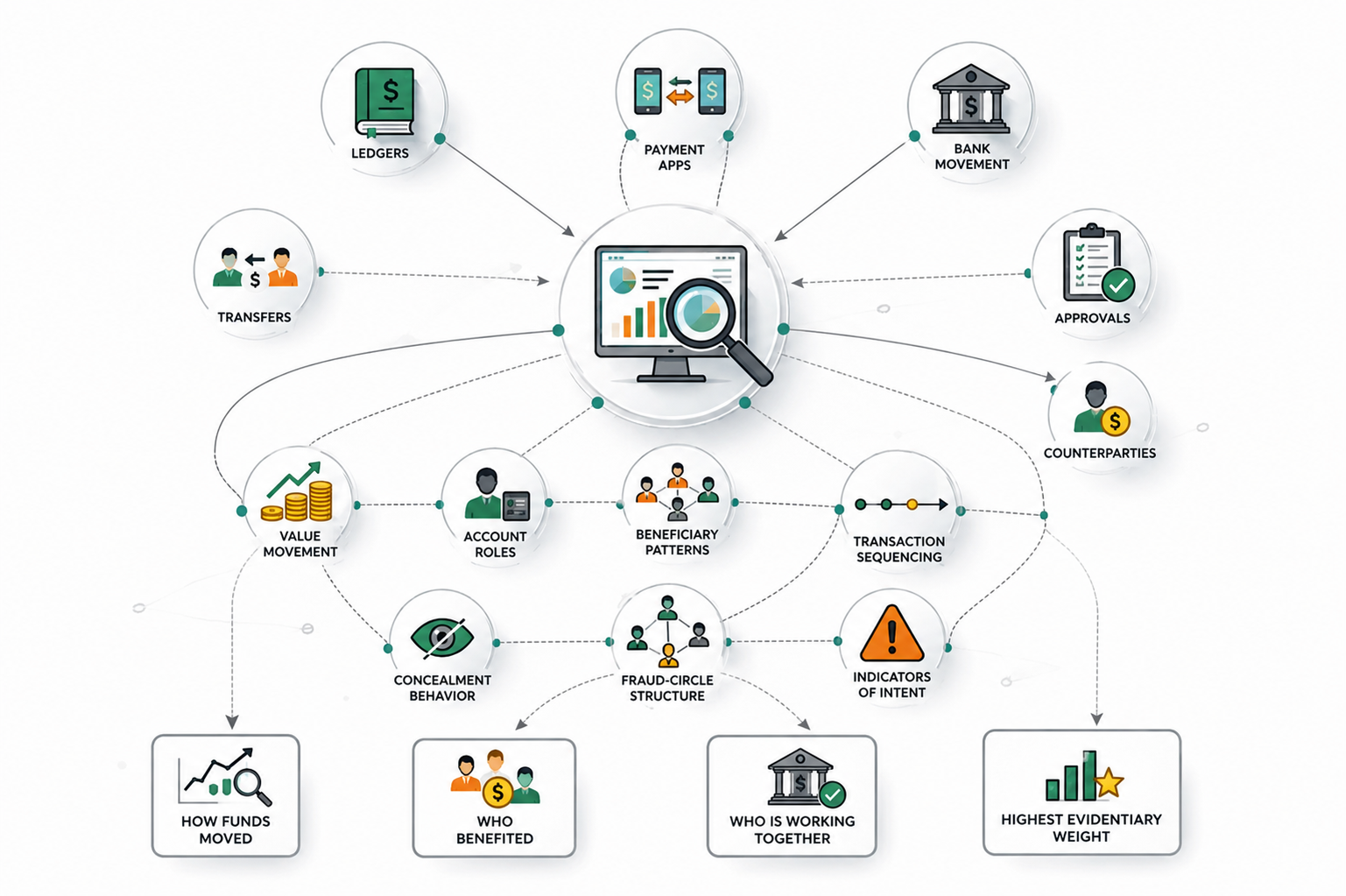
RemiFetch uses AI to rapidly detect the most common and high-impact financial crimes—analyzing activity across accounting systems, payment platforms, and financial records to identify fraud, theft, and suspicious transactions in minutes.

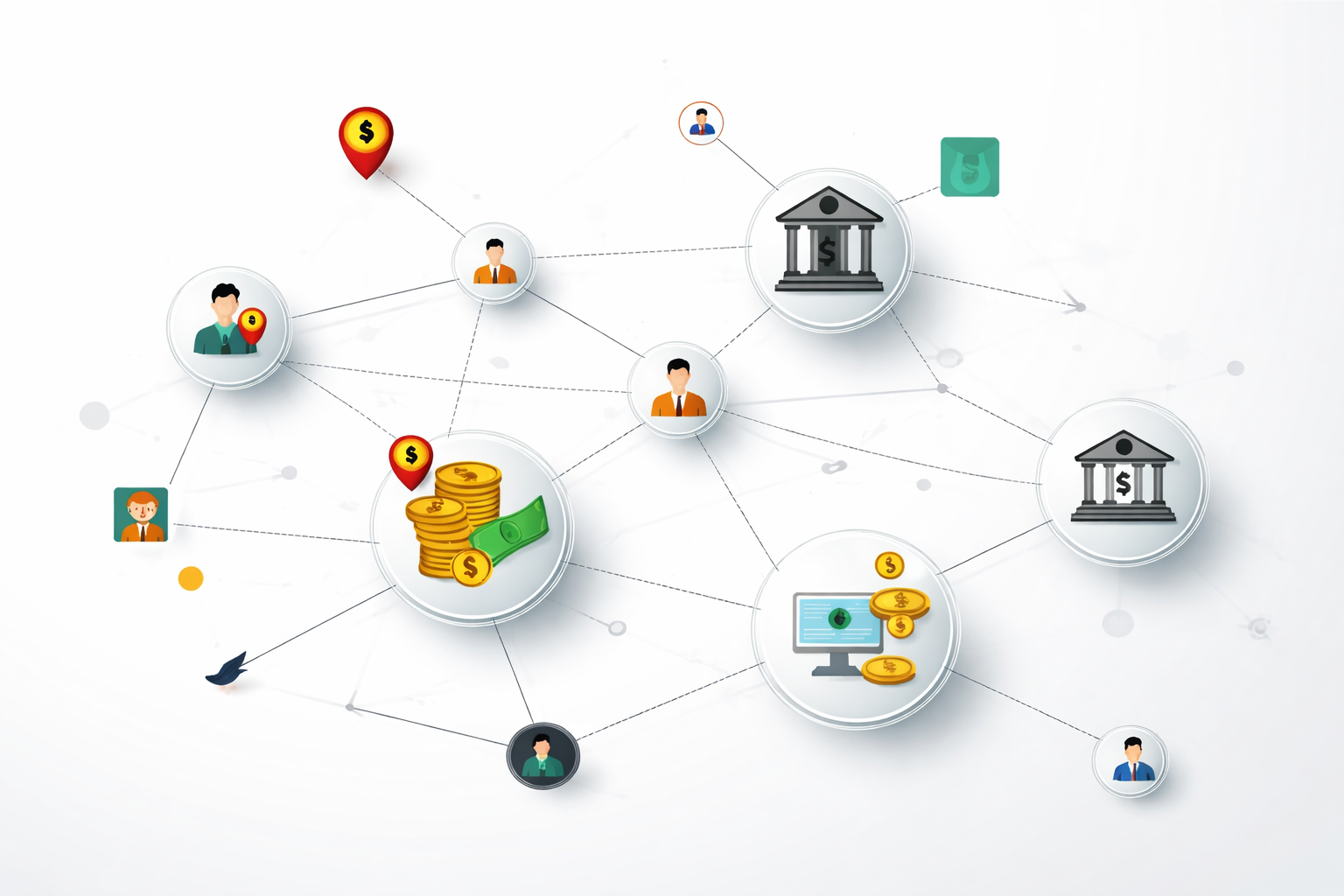
But detection doesn’t stop at a single system. RemiFetch correlates financial activity across accounting packages and personal banking applications—linking transactions, tracing payment flows, and uncovering how funds move between accounts. This cross-source visibility enables investigators to follow the money, identify hidden relationships, and understand the full scope of financial misconduct.

The result is faster detection, deeper insight, and a clear, evidence-backed view of financial activity across both business and personal financial environments.

  • Detects the top fraud, theft, and financial crime patterns automatically
  • Analyzes accounting systems, payment platforms, and transaction data
  • Correlates activity with personal banking apps to trace payments
  • Follows the movement of funds across accounts and financial systems
  • Identifies hidden relationships between transactions and entities
  • Detects anomalies, unusual transfers, and suspicious financial behavior
  • Produces evidence-backed findings and transaction-level reporting

Cross-Platform Financial Tracking From Accounting Ledgers to Personal Payment Apps

AI analyzes financial data beyond simple rule checks—examining ledgers, transactions, and accounting activity for patterns that indicate fraud, theft, or financial misconduct. Instead of relying on predefined signatures, it identifies behavioral anomalies such as unusual payment timing, approval bypasses, duplicate vendors, or structured transactions designed to evade detection.

Once red flags are identified within accounting systems like NetSuite or QuickBooks, the analysis expands across personal banking and payment platforms. The system correlates transactions, accounts, devices, and user activity—linking ledger entries to real-world money movement through apps like PayPal, Venmo, Stripe, and others.

By connecting these data sources, AI reconstructs the full financial trail—revealing how funds were moved, where they ended up, and who was involved. The result is a clear, evidence-backed view of suspicious activity that would be difficult or impossible to uncover by reviewing systems in isolation.


  • Accounting Systems Detections

    Accounting AI analyzes QuickBooks and NetSuite activity beyond basic rule checks—reviewing ledgers, journal entries, AP/AR flows, and user actions to detect fraud behaviors like approval bypasses, duplicate vendors, and unusual timing. It correlates related transactions and account activity to reveal hidden relationships between vendors, employees, and payments that are hard to spot inside a single system. The result is an evidence-backed trail showing what changed, who initiated it, and why the pattern indicates potential theft or misconduct.

  • Pay Apps Detections

    AI traces pay-app activity by starting with QuickBooks/NetSuite ledger and payment records, extracting the invoice/bill, vendor/customer, amount, and processor references tied to each disbursement or receipt. It then correlates those identifiers to PayPal/Venmo/Stripe events (payouts, transfers, fees, chargebacks) and reconciles net-of-fees settlement amounts against personal bank statement deposits/withdrawals using ACH descriptors, trace numbers, and posting dates. The result is an evidence-backed chain—ledger entry → pay-app transaction → bank settlement—that exposes suspicious movement patterns like split transfers, rapid pass-throughs, round-trips, or timing anomalies designed to obscure who received the funds.

Trained AI Models That Detects These Financial Thefts, Frauds and Crimes


  • Core Financial Fraud Categories
    • High-Value Transaction Anomalies
    • Duplicate Transaction / Vendor Fraud
    • Cross-Currency Manipulation
    • Rounding Manipulation Patterns
    • Off-Hours Financial Activity
    • Inactive Period Activity (Dormant Account Abuse)
  • Account & Access Abuse
    • Account Takeover (ATO)
    • Role Escalation / Privilege Abuse
    • Unauthorized Treasury Module Use
    • Terminated Account Access
    • Shared Session Misuse
  • Payment & Transfer Fraud
    • Unauthorized Transfers (P2P / New Counterparty)
    • High-Velocity Microtransaction Structuring
    • Refund / Chargeback Abuse
    • Payment Limit Override Abuse
    • Sudden Payout Anomalies
  • Merchant & Vendor Fraud
    • Merchant Fraud (Non-delivery / Disputes)
    • Duplicate Payment Patterns
    • Shell Company Usage
    • Dead Entity Invoicing
  • Money Laundering & Financial Crime
    • Money Mule Activity
    • Rapid In / Out Flow Patterns
    • Crypto Laundering Detection
    • Policy Evasion / Laundering Signals
  • Process & Control Bypass
    • Multi-Approver Bypass
    • Self-Approval Detection
    • Justification Bypass
    • Backdated Entry Manipulation
  • Artifact & Intelligence Signals
    • Bank / IBAN / SWIFT Artifacts
    • Crypto Wallet / Transaction Artifacts
    • Social Handle / External Identity Artifacts
  • AI-Driven / Advanced Threat Indicators
    • AI-Enabled Scam Indicators
    • Prompt Artifact / Synthetic Interaction Evidence
  • Behavioral & Pattern-Based Detection
    • Unusual API Usage Patterns
    • Behavioral Anomaly Detection (Cross-System)

AI Generated Reporting

Our financial reporting suite delivers transaction analysis, ledger validation, access auditing, payment fraud detection, identity verification, and cross-system correlation—transforming fragmented financial data into a clear investigative narrative.

  • Identity & Entity Analysis
  • Financial Crime & Laundering Analysis
  • Core Financial Reports
  • Accounting & Ledger Analysis
  • Payments & Transfer Analysis
  • Artifact & Intelligence Reports
  • Transaction & Activity Analysis

Read more …Financial Accounting

  • Hits: 722

More Articles …